A case study prepared by us for a module under the guidance of IIMB Professor Mr. Ashok D. The subject was services marketing.

Would love your comments and views.
m.m
A case study prepared by us for a module under the guidance of IIMB Professor Mr. Ashok D. The subject was services marketing.
Would love your comments and views.
m.m

m.m
m.m
m.m

m.m
m.m

m.m
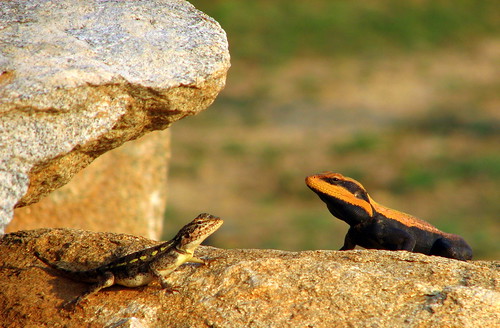
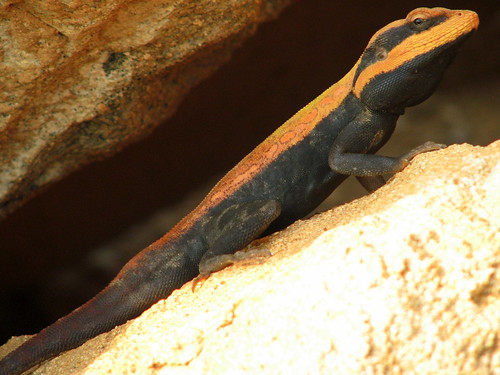
My interest in this species started off a few months back when I was walking near a empty plot in JP Nagar 7th Phase, I spotted the colorful male and a few days later spotted the beautiful black and white female. This pair remained elusive for a couple of weeks and finally I could spot them and photograph them.
I usually commute to office via Kannakapura road and then through the Thurahalli range. Once while returning back home, I decided to take a deviation away from my usual route to do a bit of birding. In this route suddenly I saw a couple of lizards and rock agama’s basking in the sun.
For more read here - http://www.wow-wonderworks.blogspot.com/2010/05/rock-agama-part-2.html
A snapshot of pictures, the complete 2 - 3 weeks of tracking is in the above link.

m.m

Some pointers from The Ambidextrous Organization by Charles A & Michael L T – HBR
Some examples discussed – Kodak, Boeing, USAToday.com, Ciba Vision.
Types of Innovation
1) Incremental Innovations – Small improvements in existing Products and Operations.
2) Architectural Innovations – Technological or Process advances to fundamentally change a component of element of the business.
3) Discontinuous Innovations – Radical advances / breakthroughs that my change / alter the basis for competition in an industry.
Team / Org Structures
1) Functional Designs – Integrate project teams into the existing org and mgt structure. Ex – mfg, sales and R&D reports to a GM.
2) Cross functional teams – Operate within the established org but outside the existing mgt structure. Ex – mfg, sales and R&D reports to a GM, but a separate unit called emerging business cuts across mfg and r&d report to the respective unit.
3) Unsupported teams – are setup outside the established org and mgt structure. Ex – mfg, sales and R&D reports to a GM, but a separate unit called emerging business also reports to the GM.
4) Ambidextrous Organizations – Establish project teams that are structurally independent units each having its own processes, structures, cultures but are integrated into the existing mgt structure. Ex – mfg, sales and R&D reports to a GM under the division existing business, but a separate unit called emerging business which also has mfg, sales and R&D reports to the GM.
The difference in many are the path that they choose,
1) Exploitative Business
2) Exploratory Business
Their difference would lie in the factors – Strategic intent, Critical tasks, Competencies, Structure, Controls, Rewards, Culture, Leadership roles.
I have till date only heard of the 360 degree feedback.
The types of feedback are
1) 90 Degree Feedback – Collect data only from the leadership team of the division.
2) 360 Degree Feedback - Collect data not only from the leadership team of the division but also from multiple groups and multiple levels.
3) 720 Degree Feedback - Collect data not only from the leadership team of the division but also from multiple groups and multiple levels and the difference being data is collected from the external agency, customers etc.
m.mCapitalizing On Capabilities by Dave Ulrich & Norm Smallwood from the HBR spotlight.
The article speaks of the most admired companies like GE, Starbucks, Microsoft etc but a layman doesn’t know what transpires behind the screen, the number of leaders, their structure to success etc…
I will try listing some key points
* All specific organizational capabilities are called key intangible assets. They are difficult to measure. [That is why there is a clear difference in evaluation of startups in the same space, some might be generating more revenue but valued lower as the other has some great leaders and potential – Ex – Delta vs. JetBlue]
* In a unit these 4 are the main factors, Individuals Competence, Individuals Leadership, Organizations core competencies and Organizations capabilities (includes DNA, culture and personality).
The main 11 traits that are looked for are
1) Talent – Competent employees have the skills for today's and tomorrows business. The functions here are buy – acquire new talent, build – develop existing talent, borrow – get talent through networks and leaders, bounce – remove poor performers and bind – retain the best talent. The must is that good employees must get the best.
2) Speed – How fast can the company adapt to new opportunities and existing changes in the environment, ROTI – return on time invested index must be maintained and used.
3) Shared mindset and coherent brand identity – Get a consensus from your employees and customers on what they want to remember you as. Example – ask them what are the top three things they want to remember the company as? Good companies are in the range of 80 – 90 %
4) Accountability – Performance accountability needs to be firm and in place. Instead of giving an average of 3 – 4 % across the board ensure you give 0 – 12 % depending on the performance and the work done.
5) Collaboration – A organization needs to collaborate across projects, divisions, units etc.It also promotes huge savings.
6) Learning – Benchmarking, experimentation, competence acquisition, and continuous improvement are key factors. Also letting go of old practices and adopting new ones are important.
7) Leadership – The pride for a organization must come from the number of leaders / CEO’s they create and the number of back up leaders that they have. Example: Ex McKinsey employees take pride from the no of CEO’s they create from their alumni.19 former GE stars added a collective 24.5 $ billion to their organizations after joining.
8) Customer Connectivity – As usually one would like to have 20% of customer account for 80 % of profits, the ability to connect with the customer is valued very much.
9) Strategic unity – The three levels are Intellectual, Behavioral and Procedural.
10) Innovation – It excites employees, delights customers and gives confidence to investors.
11) Efficiency – It is the easiest capability to track.
Capabilities Audit – can be done by running through the 11 pointers in each unit, or the business as a whole. The PDF link provides detailed information on how to complete the audit.
Maximizing your capabilities
For the complete article go through the following link.
http://info.psu.edu.sa/psu/fnm/asalleh/Capabilities.pdf
Feels nice to have a couple of my technical articles featured on JAVA Beat website.
http://www.javabeat.net/authors/Monish/
http://www.javabeat.net/tips/193-javalangoutofmemoryerror-permgen-space.html
http://www.javabeat.net/tips/192-javalangoutofmemoryerror-java-heap-space.html
Do add some feedback if you like the articles.

Update 8/2/10 - http://www.javabeat.net/tips/194-job-schedulers-unix.html
Update 5/3/10 - http://www.javabeat.net/tips/195-static-code-analysis-tool-firebugs.html (it is actually findbugs and not firebugs)
m.m
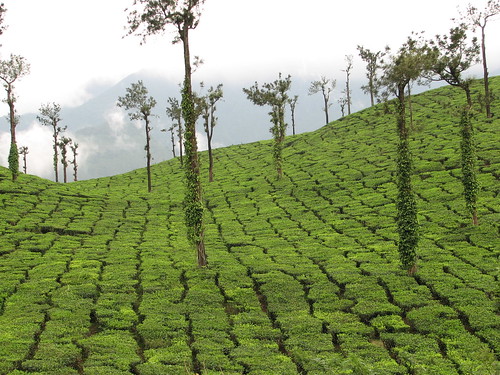
http://greatbackwaters.com/ The new Site by Kerala Tourism.
Kerala is better known as gods own country.
The search for a house boat is tough, add to it the several 100's of google search results the equation just got tougher, add to it the several different branding that each company promotes their offering with the equation seems to be getting out of hand, add to it the facilities provided by different companies, add to it the various reviews on the net and you would had gifted yourself a big problem that most of the super computers would find hard to crack.
Coming to the search of house boats, I am going to add my experiences booking a house boat and am yet to experience the final outcome. Infact my study has ticked off a few travel agencies in kerala and my cubicle mate even went to the extent of saying that I could take this up as a PHd Study.

m.m
m.m
HESARAGHATTA WORKSHOP
Art of Seeing - The Magical Light with Mahesh Bhat.
Wide barren grasslands, sun blazing away, huge birds of prey, 8 photographers pounding the 300 acre land. A result of the 2 day workshop with Mahesh Bhat at Hesaraghatta.
Please click on the picture or link below.
Would love to have your comment and critique.
m.m